The Drip Is the Message
On McLuhan, disclosure, and the slow filling of your sink

Marshall McLuhan’s most famous sentence, the medium is the message, is also his most misunderstood, so let me do the unpacking before I put it to work. McLuhan was not saying content doesn’t matter. He was saying something stranger and more useful: that the form of a medium reshapes us more deeply than anything carried through it. The railway didn’t matter because of what it hauled. It mattered because it restructured cities, time, and the human sense of distance, regardless of cargo. Television didn’t change us through its programs; it changed us by training a species to receive the world as ambient image. The content of any medium, McLuhan liked to say, is a juicy piece of meat carried by the burglar to distract the watchdog of the mind. While you’re busy evaluating the message, the medium is quietly rewiring the room you’re evaluating it in.
Now apply the correction to the question that half the internet claims to be asking: when will disclosure happen?
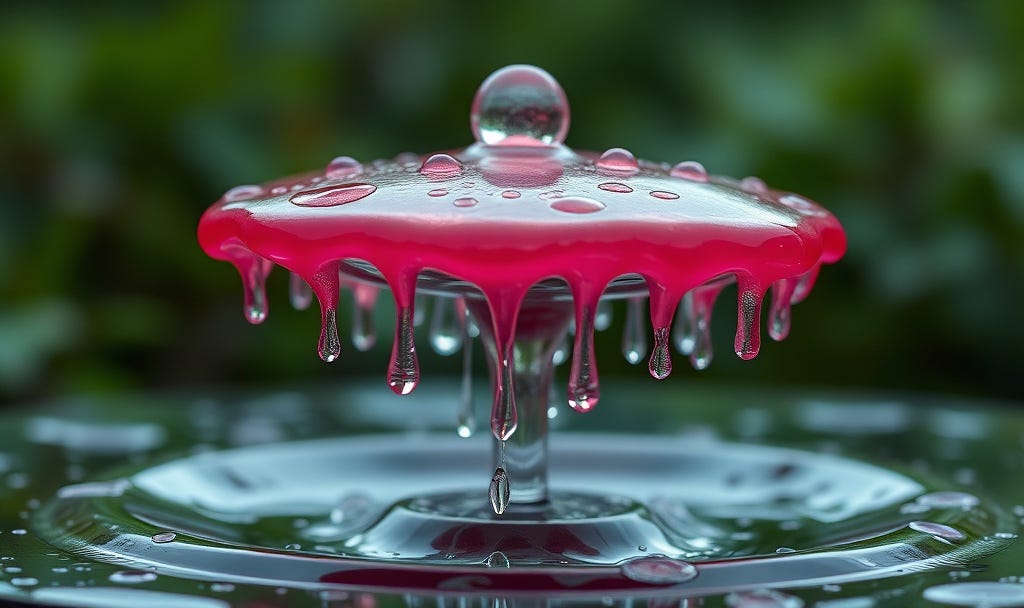
Wrong question. Look past the content (the Tic Tac clips, the whistleblowers, the ninety-day teases) and look at the form. What is the medium of disclosure? It is not the press conference. It is not the document dump. Sixty years of waiting for those has taught us they are not coming, or rather, that when pieces of them come, nothing detonates. No: the actual medium through which the phenomenon is entering collective consciousness is the drip. A leak here. A retired official’s careful sentence there. A podcast that moves the line one inch. Another. Another. The drip-drip-drip, maddening to everyone who wants the dam to break, is not a failed rollout or a cowardly compromise.
The drip is the medium. And the medium is the message.
So what is the message of the drip? Here is where the kitchen comes in. A drip fills a sink. Slowly, absurdly slowly, drop by drop, and then one day you glance over and the water is at the rim. Nothing dramatic happened on any particular day. No single drop was the disclosure. But the sink does not care about drama; it cares about accumulation. The message of the drip-drip medium is this: you will not be told; you will be filled. Disclosure is not an event that happens to the world on a Tuesday. It is a level that rises in each person separately, one interview, one book, one 2 a.m. rabbit hole at a time, until the water reaches the top of your basin. Then it runs over, and for you, and you alone, on no particular date, contact is simply a fact.
The Fantasy of the Broadcast
The disclosure movement’s collective fantasy is a broadcast-era fantasy: the President at the podium, the networks cutting in, the single simultaneous moment when everyone learns together. It’s a beautiful dream and a media anachronism. It imagines 2026 information moving through a 1962 apparatus. That apparatus is gone. There is no podium the whole species faces anymore, no Cronkite whose sentence lands on every ear with the same weight. The broadcast fantasy also fails for a deeper reason, one the phenomenon itself seems to understand better than its investigators: a truth this large delivered at broadcast speed would not inform a population; it would concuss one. You cannot pour a reservoir into a teacup and call it hydration.
Which is to say: the phenomenon cannot be disclosed through the mass event. It has to be disclosed through the long form. And it is being disclosed through the long form, right now, at scale, to anyone paying attention to their own attention.
How the Sink Actually Fills
Watch how it really happens. How it happened, probably, to you. You hear a three-hour conversation with someone: a physicist, an experiencer, a researcher who spent forty years on one cold case. Something in it snags. You listen to another. You notice which guest you trusted most. Not believed, trusted, that older animal instinct. You buy that person’s book. The book cites other books. You read those. You find the interview the author gave fifteen years before anyone cared, and it says the same thing, and that consistency does something to you that no press conference could. You think about it on your commute. You bring it up carefully at dinner, testing the water in other people’s sinks. Drip. Drip. Drip.
Notice what medium is doing this work: the podcast, the long-form interview, the memoir. Intimacy technologies. Three unhurried hours of one human voice in your ears is structurally closer to friendship than to journalism, and the epistemology it runs on is the oldest one we have: extended acquaintance. I have listened to this man for forty hours across five years; I know how he hedges; I know what he sounds like when he’s unsure; he is not lying. Mock that standard if you like. It’s not peer review. But it is precisely how humans assessed testimony for the hundred thousand years before institutions, and the institutions have hardly covered themselves in glory on this subject. The long form doesn’t tell you what to believe. It gives you enough exposure to calibrate a person, and then lets their testimony drip into your basin at a rate you can absorb without shattering. The medium is doing slowly, personally, and voluntarily what the broadcast fantasy would do instantly, universally, and violently. The drip is not the failure of disclosure. The drip is disclosure, working.
The Hearing Is a Medium Too
This is why the conspiracy-adjacent corners of the UFO world keep breaking their hearts against congressional hearings. Twenty twenty-three: sworn testimony, non-human biologics, cameras everywhere. And within a week, the freak-out. Nothing happened! No documents! Theater! The disappointment was real, and it was a category error. The hearing was never going to fill anyone’s sink; a hearing is not a filling medium. It is a consecrating medium, one of the last liturgical forms we have left. Oaths, raised hands, the dais, the formal address: this is ritual architecture, and its function is not to transfer information but to make a claim official. To perform, in ceremony, the fact that the subject is no longer fringe. Nothing said in that room was new. What was new was the rite being performed over it.
And that’s not nothing. That’s a drop of a different density. The ritual drop doesn’t add much water, but it changes what the water is: after the consecration, every subsequent drip lands as testimony about a subject the United States Congress has formally entertained under oath. The people expecting the hearing to be the flood misread its genre. It was never the flood. It was the blessing of the sink.
Big Secrets Protect Themselves
McLuhan, again, decades ahead of the field: “Only puny secrets need protection. Big discoveries are protected by public incredulity.”
Sit with how precisely that describes our situation. The great fear of the UFO subculture has always been the cover-up: the men, the memos, the locked hangars. And surely some of that apparatus exists. But McLuhan identifies the deeper mechanism, the one that requires no conspirators at all: a sufficiently large truth generates its own concealment, because minds encountering information too big for their categories do not revolt against the secret-keepers. They shrug. The shrug is the security system. No budget required.
The feed has industrialized this. Scroll through any platform and sworn testimony about non-human craft arrives in the same little rectangle as a trailer, a recipe, a llama. The form of the feed assigns every item identical ontological weight. That is what the form does. So the biggest fact in human history weighs, on arrival, exactly as much as lunch. The scroll gesture itself, ten thousand reps a day, is somatic training in the art of not stopping. When people say “if it were real, it would be everywhere,” they have it backwards. It is everywhere. Everywhere is the medium that weighs nothing.
So stop waiting for the mainstream to hand you the flood. The experts will shrug; their expertise is a sink built specifically to keep this water out. The anchors will shrug. Your brother-in-law will shrug. They are not lying and they are not stupid; their basins simply haven’t filled, and no single drop you show them, no clip, no article, no did you see the hearing?, will ever do what accumulation does. You cannot pour your sink into someone else’s. Believe me. I have tried. It just splashes.
Be Your Own Disclosure
Which brings me to the thing I have been saying since before it was strategy, back when it was just survival. In my book I put it plainly: we are not looking for evidence to convince the incredulous masses. The skeptical mind moves the goalposts forever; chasing it is a treadmill dressed up as a search. We are looking for information to take us deeper into our own initiation. The researcher’s task was never to disclose the phenomenon to the world. It was to disclose the phenomenon to himself. To convince the one mind whose basin he actually controls, through his own study, his own experiences, his own long nights of drip-drip-drip, until his private water ran over and the question quietly changed from is this real? to what do I do now that I know?
That is what I mean by be your own disclosure. Don’t picket the Pentagon of the attention economy, begging its spokesmen to fill your sink from their podium. They can’t. It was never theirs to fill. Pick the researcher you trust and read all of them. Follow the citations down. Sit with the high-strangeness cases that don’t fit even the UFO orthodoxy, the ones that make the believers squirm. Log your own synchronicities like a scientist and your own shrugs like a suspect. Fill your basin with intention instead of waiting for it to fill by accident, because it is going to fill either way. That’s the last thing the medium guarantees.
The drip does not stop. That’s the property of drips: they are inexorable in a way floods never are. A flood arrives and recedes; a drip only accumulates. Every month now the level rises. Another physicist goes on the record, another program gets a name, another normie corners you at a barbecue, lowers his voice, and asks the question he would not have asked two years ago. His sink is filling too. He doesn’t even know it yet. That’s how this medium works: silently, individually, and then, at the rim, all at once.
The broadcast never came. The drip never stopped. Sinks are running over one by one, in no order the networks will ever announce, and one of the last messages of McLuhan’s career turns out to be the first commandment of the disclosure era:
Stop watching the faucet.
Start putting down towels in your kitchen, because the drip, drip, drip is not going to stop until all of our floors are wet.